
One Battle Over And Over
With Hollywood

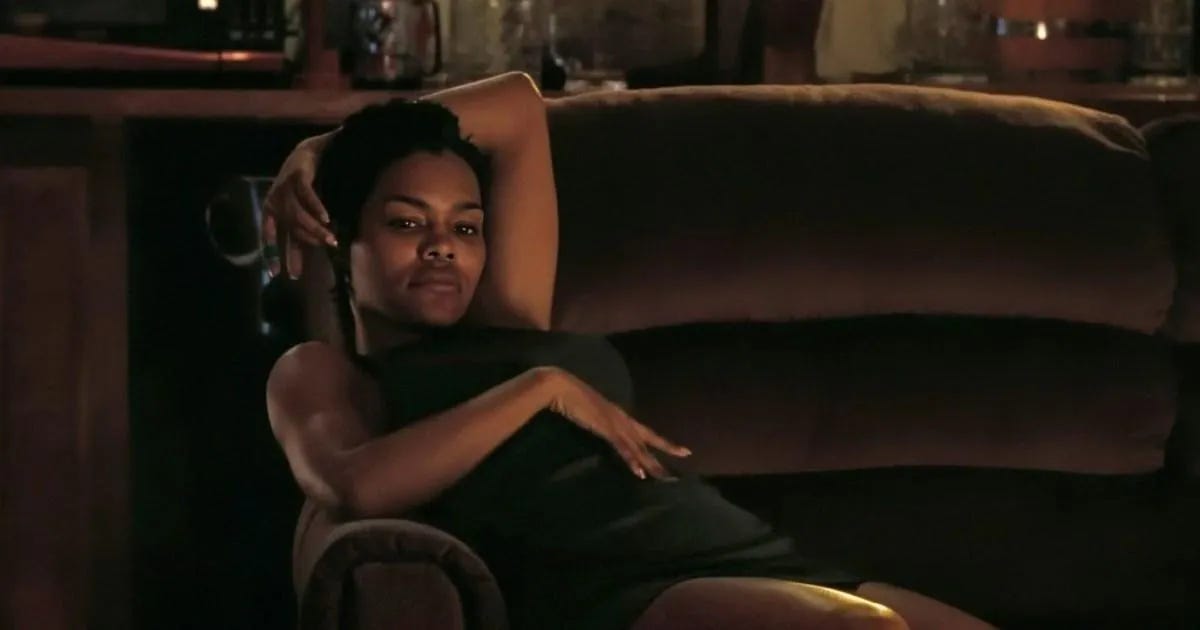
In 2016, I liked La La Land better than Moonlight. Honestly, I still kind of feel that way. The tension in that “kind of” is that Moonlight is, in my opinion, objectively the better movie. Moonlight is artistically perfect, socially consequential, and so culturally brave that it almost feels silly to compare it to a Hollywood love story where the characters sing and dance.
But yeah, I liked the movie with the dancing better.
What I’ve learned since then is that art isn’t really about what’s objectively “better.” Art is about what’s authentic to the artist and resonant to the consumer. La La Land—a movie about humanity, love, and loss in the pursuit of creation—spoke to me. Maybe it spoke to me because I’ve always felt like I’ve never quite had the courage to fully sacrifice for a dream. I’ve always held back just enough, been just safe enough, corporate enough, to get almost there. Like wanting to be an NBA player, but settling for being a referee. You’re in the NBA—but also, you’re not.
La La Land ends with a chance encounter between its two romantic leads after their relationship is over. Emma Stone’s Mia wanders into a bar where Ryan Gosling’s Seb is playing piano. It’s been a while since they last saw each other. She’s made it as an actress; he seems to have made it as a jazz musician. They are both confronted with what achieving their dreams actually cost them: each other. They don’t speak. He plays. She watches. And I felt indicted. The film seemed to ask how much you really love the thing you claim to love. Would you sacrifice a half-soulmate for the full realization of your purpose? I felt all that, and I felt fine having that reaction. I also felt fine saying that Moonlight, though better, didn’t move me the same way.
Everything was fine—
until I said it on TMZ.
A little context: before my confrontation with Kanye West on TMZ, I wasn’t “Van Lathan” or “Van Lathan Jr.” Not professionally, at least. My name was “The Black Guy From TMZ.” Only after that moment did people get curious about who I actually was. So, before then, when I spoke, it wasn’t really me speaking. I was speaking as a kind of Black cultural avatar, not as one dude with one take—which is precarious.
When I said I liked La La Land better than Moonlight, people I knew and respected reached out. They did two things.
One, they challenged the take.
Maybe, they said, I’d learned to center whiteness and white stories at TMZ. Maybe some entrenched homophobia was blocking me from connecting with the Black male protagonists in Moonlight. One brilliant sister told me it was possible the heteronormativity of La La Land mattered more to me than the Blackness of Moonlight. She asked me a question I still think about today:
“Are you straighter than you are Black?”
Two, they told me directly that TMZ was the wrong place to express that opinion.
They said criticism of Black art has to be a home game. It has to happen in a space where the nuances of Black culture aren’t exotic or performative but instinctive.
Places that don’t understand unspoken Blackness can’t properly evaluate spoken Blackness.
And Black folks in those places shouldn’t fool them into thinking they can.
I hadn’t thought about any of that in years. I’ve since revisited Moonlight more than La La Land for various reasons—including the fact that Moonlight is now regarded as one of the most important films of this century, and La La Land isn’t. But the question of how we talk about Black art—and Black people in art—has persisted.
And now it’s resurfacing with one character:
Perfidia Beverly Hills.
Now that we’ve reached the actual point of this piece, let me be clear about one thing: I am not speaking for Black women here. Black women do not like that, and I like Black women, so I try not to annoy them. The critiques of Perfidia as they relate to Black womanhood are outside my lane. Brooke Obie, Jamilah Lemieux, or several others would be more qualified.
What I can talk about is why it’s important to examine this character through a cultural lens.
The answer is simple:
Because a white man wrote her.
One Battle After Another is a cinematic adaptation of Thomas Pynchon’s 1990 novel Vineland, which features the character Frenesi Gates—Perfidia’s template. In the novel, Frenesi is a blonde woman with too much makeup, a walking embodiment of 1980s big-hair, spray-on-face aesthetics. But she’s more than that. She’s commentary on the 1980s themselves.
In the book, Frenesi is a revolutionary in the ’60s and ’70s who meets and becomes fascinated with government agent Brock Vond. That fascination becomes seduction—psychological, not romantic. Vond leverages his authority, confidence, and professionalism against her. Frenesi, disillusioned and emotionally exhausted from revolutions that seem to be running out of gas, is vulnerable. She’s unsure what she believes anymore. So when she’s offered something new—even something grotesque—she takes it.
This happened in the ’80s.
Just like that, it happened, to real people.
I think of two pieces of art immediately: Family Ties and The Big Chill.
Family Ties was a hit sitcom about two former hippies who settled into ’80s suburban life and watched their worst nightmare unfold: their son, Alex P. Keaton, grew up to be a conservative Republican.
The Big Chill is a pillar of white American shit —a film about disillusioned thirtysomething friends reunited by a suicide, all grappling with the death of their idealism.
There was a cultural whiplash for the Free Love generation as the religious right, Reagan, and Wall Street capitalism ran a train on their youth.
I see that angst in Frenesi, the same way I see it in Family Ties and The Big Chill. I see commentary on the fragility of revolutionary ideals and their proximity to youth. I see a generation of white people who realized they weren’t mad at America—they were mad at their parents.
In three viewings, I can’t see any of that in Perfidia Beverly Hills. None.
She feels dominated by primitivism, with no discernible point of view.
When Pat tries to teach her to rig bombs, Perfidia wants to fuck.
When Pat tries to use the bombs, Perfidia wants to fuck.
When it’s time to subdue Sean Penn’s lockjaw character, she wants hard dick.
When he gets the drop on her, she uses sex as a weapon, then gets pregnant.
She’s not cautious enough to use condoms, not curious enough to question paternity.
She abandons the baby, the group, and the movement—and flees to Mexico.
None of this would matter except for one thing: Perfidia has been race-swapped.
She’s now a Black woman.
No one asked for this.
No one demanded it.
Paul Thomas Anderson has made movies with zero Black characters and no one said a word.
He made the decision to adapt a character with a very clear thematic purpose—then write the movie version as a prop.
A Black prop.
The question is: why?
Is PTA saying anything? Does Perfidia have to say anything?
Probably not. But that’s the boring question.
The more interesting one—the one simmering underneath every debate like this—is:
How well do white people actually know Black people?
What’s at the heart of this conversation is whether a white artist can write a Black character with anything meaningful to say.
Writing Black women as sexual objects is easy.
Writing Black men as deviants is easy.
Writing fully formed Black characters?
That’s the heavy lift.
That’s the one that always gets the eye rolls.
Teyana Taylor is a serious awards contender for playing Perfidia. Everyone I know is ecstatic for her. She’s a cultural figure we root for. She’s incredibly talented, authentic, and fine in a very Black way. She’s been vocal in defending the character, and I get it. This role is her magnum opus. She deserves the acclaim.
For the rest of us, though, we still have to ask questions about how we’re depicted.
It’s wack.
In a perfect world, we’d just enjoy art.
But me?
I don’t trust the country enough.
I think you think Black men are criminals.
I think you think Black women are loud and feral.
I think you think we’re better off if you take care of us.
I think you’d rather write us off than write us right.
I could be wrong.
I’m definitely sensitive.
But the only way to build the trust we don’t have is to keep talking.
Oh—before I go, I have an idea for a One Battle After Another sequel. It combines the OBAA universe with The Blind Side. Perfect for awards season 2027. I normally don’t drop twice in a week, but I’m giving it to y’all Monday morning. It’s a banger, I promise.
But as always …
Fuck You If You Disagree.
I feel like I'm going mad. Why is Perfidia the be-all-end-all when it comes to how black women are depicted in OBAA? Why does Van think that her character is the sole avatar, the sole grand thesis statement for how that film views black women?
There's a bunch of other black women in the film too. There's an entire commune of black nuns! No one in their right mind would think that Lockjaw is the films grand statement on all white men so why is Perfidia burdened with the same thing?
Christ, it really frustrates me sometimes how we (black people) view black characters. The stakes are way too high, we have to be absolutely perfect, our existence on the screen has the reflect the entirety of our people. It's unsustainable and it really clouds how we watch movies. I don't think Van is that interested in discourse (which is fine, this whole thing is called "fuck you if you disagree" which doesn't scream someone who's actually interested in dialogue) but it's exhausting watching people justify the fact that a film made the uncomfortable by making a grand moral judgement on the film as a whole.
Marty Supreme was cynical and made you feel bad? That's totally cool, it doesn't mean there's a conspiracy out there where film bros are grading the movie on a curve just to fuck with you or prove a point about what a "real movie" is. The Perfidia and Lockjaw storyline made you feel gross and uncomfortable? That might be the point!
10 years later & I still haven't seen La La Land... on the other hand, it's been a little over 6 months since I watched OBAA and I still don't understand the WHY behind Perfidia's character